Key facts: Anderson Park
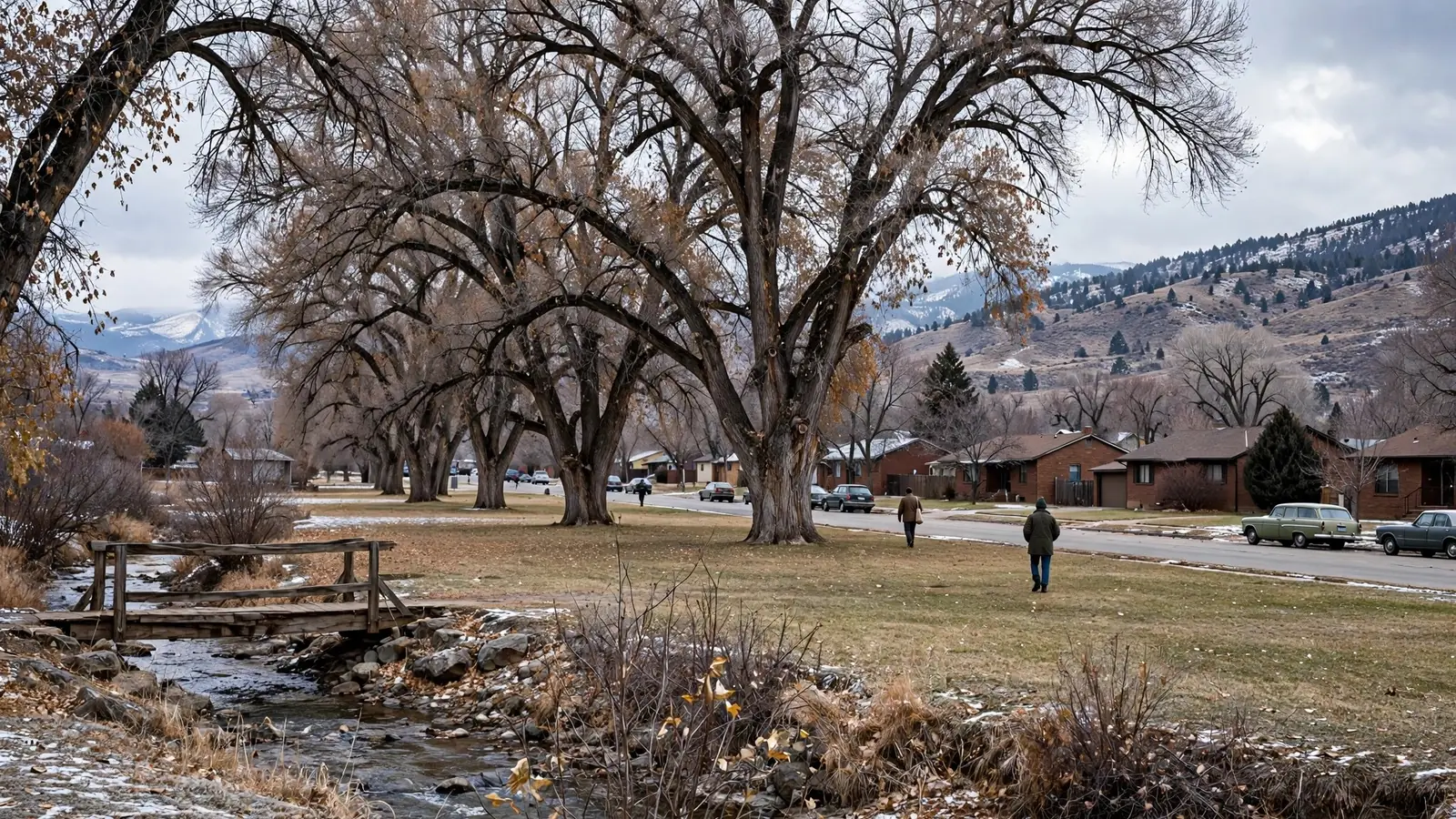
- Anderson Park is a City of Wheat Ridge park in the central part of the city, near West 44th Avenue.
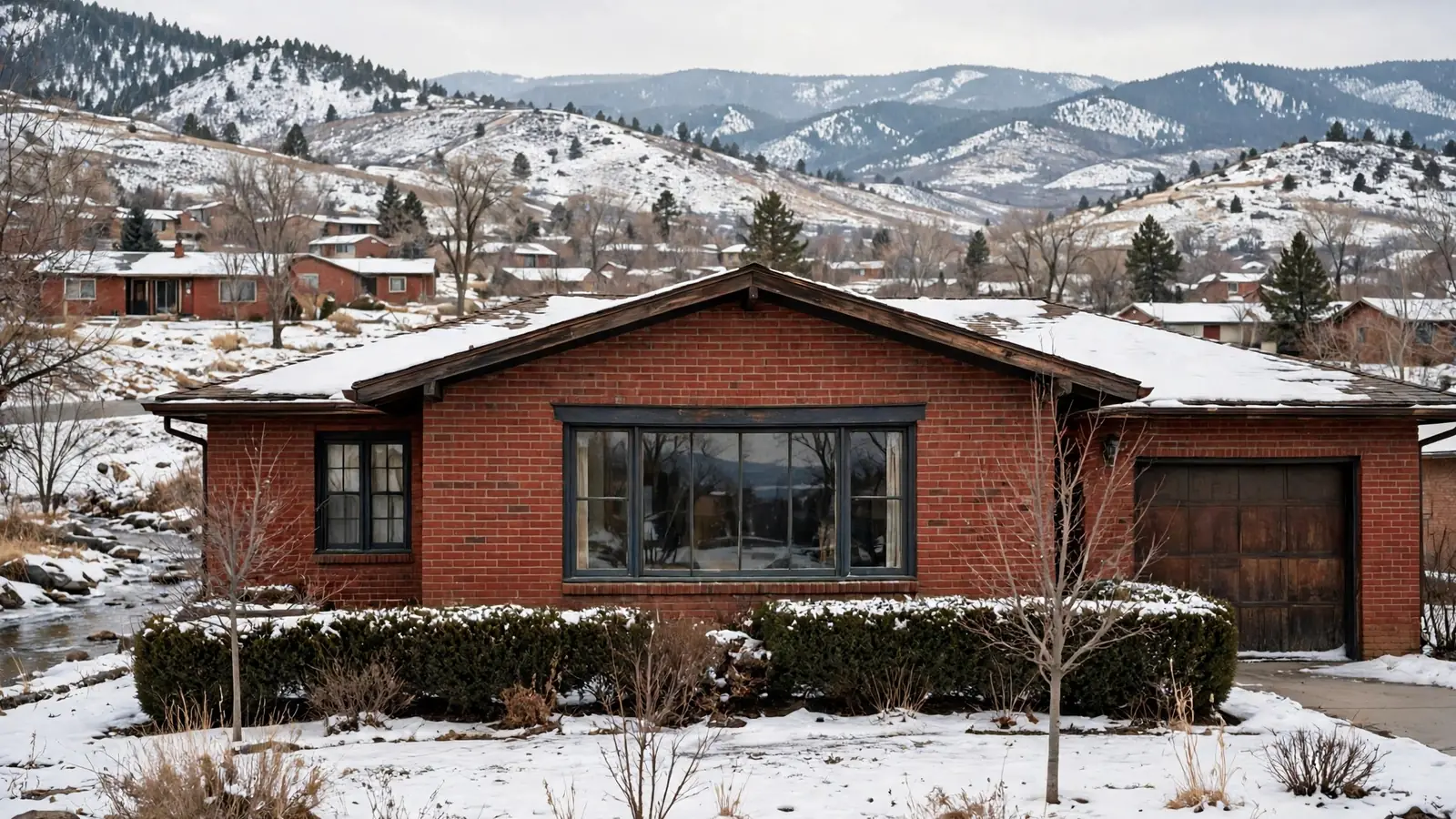
- Brick ranch homes from the 1950s to 1970s, many with finished basements, are a large share of Wheat Ridge's housing.
- In most ranch homes of this era, the water heater, furnace and laundry are in the basement.
- Homes built before 1978 may contain lead-based paint; older floor tile and mastic may contain asbestos.
- The covered ZIP code for the Anderson Park area on this site is 80033.
Covered area
Anderson Park ZIP code on this line
Households on the ranch-house streets around Anderson Park can be connected through this line to an independent restoration contractor.
- 80033Streets around Anderson Park and central Wheat Ridge near West 44th Avenue.
The neighborhood
Brick ranches and full basements around Anderson Park
Anderson Park is one of Wheat Ridge's established community parks, with a pool, picnic areas and big shade trees, and the streets around it show the city's post-war character clearly. Most houses are single-storey brick ranches built in the 1950s and 1960s, with a picture window facing the street, a carport or single garage, and a full basement. Over sixty-odd years, owners have finished those basements, added bathrooms and moved laundry and mechanical equipment around.
The density of similar houses means patterns repeat. If one house on a street has a root-blocked sewer lateral, its neighbors probably have laterals of the same age and material. If a cold snap freezes pipes along exterior walls in one house, others with the same layout are at risk. That makes local experience useful: a contractor who has worked in these houses knows where to look.
Ranch basics
How a central Wheat Ridge ranch basement is usually laid out
Mechanical corner
Furnace and water heater side by side, often near the floor drain.
Laundry area
Washer and dryer near the drain, with a utility sink in many homes.
Finished family room
Carpet or vinyl over the slab, drywall or paneling on the walls.
Basement bedrooms
Added later, often with egress windows and window wells.
Basement bathroom
Shower or toilet that may sit below the sewer line.
Storage room
Unfinished space with shelving and boxes on the floor.
Laundry
Washing machines and laundry floods
Washing machine failures are among the most common water losses in these homes. Rubber supply hoses crack with age and can burst under pressure, sending a steady stream of water onto the basement floor until someone shuts the valve. Drain hoses can slip out of the standpipe and spill a whole wash cycle. Utility sinks overflow when lint blocks the drain.
Because the laundry is usually near the floor drain, small spills disappear. Large ones spread across the floor, under walls and into the finished rooms next door. Replacing rubber hoses with braided stainless ones, turning off the supply valves when away, and putting the washer on a drain pan all help.
Anderson Park signs
Basement water clues in central Wheat Ridge ranches
| What you notice | Likely cause | Worth asking |
|---|---|---|
| Water spreading from the laundry | Washer hose or drain | Should the hoses be replaced? |
| Rusty water around the water heater | Tank failing | Is the tank leaking from the bottom? |
| Sewage at the floor drain | Root-blocked clay lateral | Should the lateral be inspected? |
| Wet wall under a basement window | Window well filled | Is the well drain clear? |
| Stain on the basement ceiling below a bathroom | Toilet seal or tub drain leak | Has the bathroom above been checked? |
Water heaters
Water heater failures in Anderson Park basements
Tank water heaters last many years, but not forever, and in these houses they sit in the basement where a failure goes straight onto the floor. A tank that starts leaking from the bottom may drip slowly for a while before failing more seriously. The relief valve can also discharge if the tank overheats or pressure rises, and if its pipe ends near the floor, water spreads from there.
Look at the base of the tank from time to time for rust or damp. If it is leaking, turn off the cold water supply to the tank and the gas or power to it, and call a plumber. A restoration contractor deals with the water that has already escaped.
Sewer laterals
Clay sewer laterals and mature trees
Houses of this age were usually connected to the sewer main with clay pipe. The street trees and backyard trees that make these blocks so pleasant have had sixty years to find the joints in those pipes. Root intrusion, settled sections and cracks lead to slow drains and, eventually, a backup through the basement floor drain.
When sewage comes up, cleanup is a contaminated-water job: protective equipment, removal of soaked carpet, pad and lower drywall, cleaning and disinfection. Get the line cleared and camera-inspected before rebuilding, because a backup that has happened once will likely happen again until the lateral is repaired.
Assessment
What a contractor should check near Anderson Park
- 1
Find and stop the source
Washer, water heater, pipe, window well or sewer.
- 2
Check the mechanical corner
Furnace, water heater and electrical panel near the water.
- 3
Map the basement
Readings in every room, including behind finished walls.
- 4
Identify older materials
Floor tile, mastic, pipe wrap and textured ceilings.
- 5
Check the floor drain
Clear, sluggish or showing signs of backup.
- 6
Photograph before moving anything
For insurance and to track drying.
Basement bedrooms
Basement bedrooms and egress windows
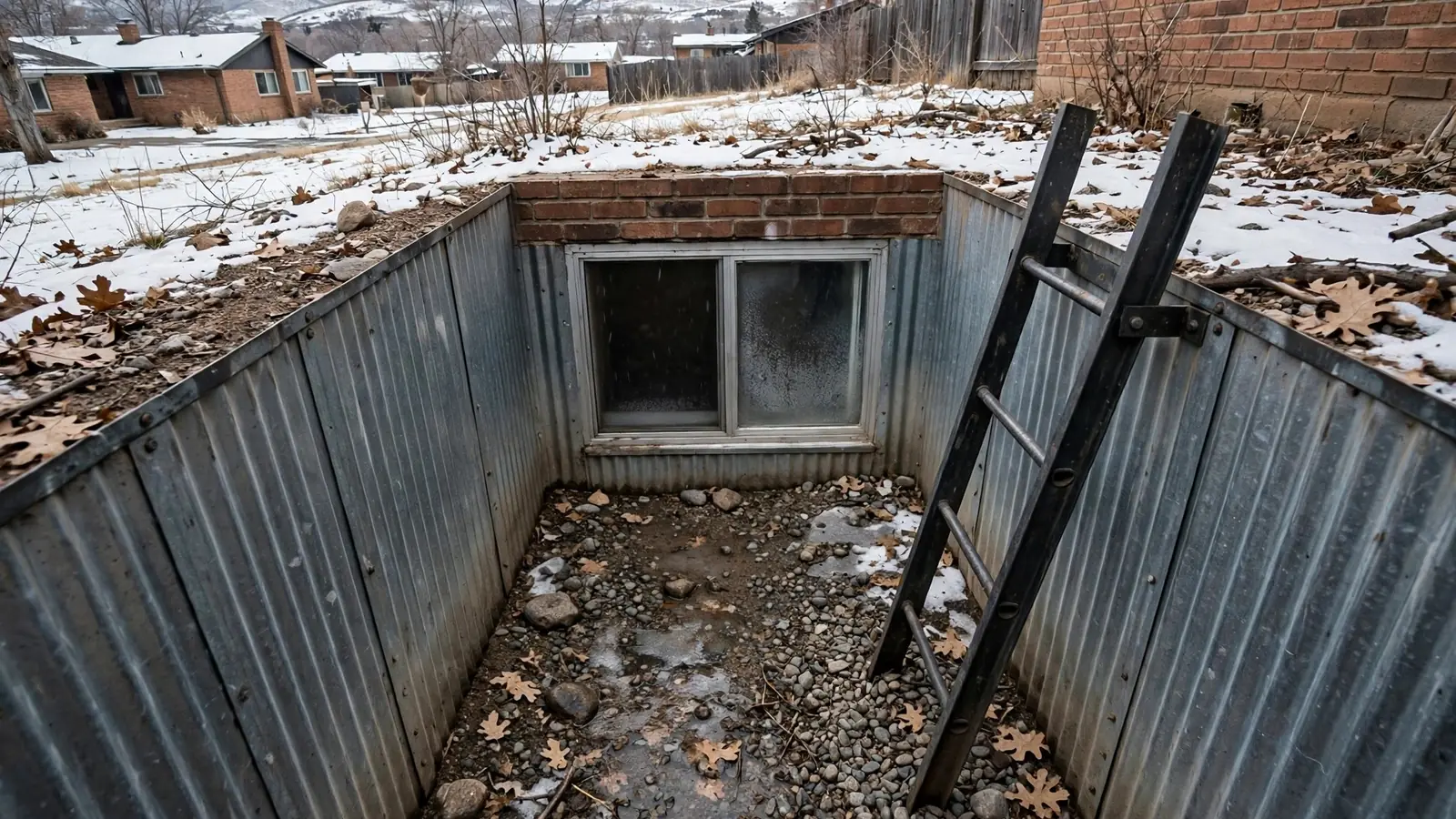
Many owners near Anderson Park have added basement bedrooms, and code requires an egress window large enough to climb out of. Those windows sit in deep wells dug beside the foundation. A well with a clogged drain fills with rain or snowmelt, and water finds its way around the window frame into the bedroom.
Cleanup in a basement bedroom usually means pulling carpet and pad, cutting out wet drywall below the window, and drying the wall. Then the well needs cleaning and its drain checking. Clear covers keep out leaves and snow while letting light through.
- Clean wells each fall
- Check the drain at the bottom
- Consider a clear cover
Winter
Frozen pipes along exterior walls
In ranch homes, the kitchen sink is often on an exterior wall, and supply pipes may run through the rim joist area of the basement where cold air leaks in. On the coldest nights, these pipes freeze. When they thaw, a split pipe sprays water into the basement ceiling or the kitchen cabinet.
The American Red Cross recommends keeping the heat steady, opening cabinet doors so warm air reaches pipes, and letting a faucet drip during severe cold. [2] Insulating exposed basement pipes near the rim joist and sealing air leaks there also helps.
Seasons
How the season shapes an Anderson Park water job
| Season | Common issue | What helps |
|---|---|---|
| Winter | Frozen pipes near exterior walls | Steady heat, insulated pipes |
| Spring | Snowmelt in window wells | Clean wells and extend downspouts |
| Summer | Storm runoff, sewer surcharges | Clear gutters, check the floor drain |
| Fall | Leaves in wells and gutters | Clean before the first snow |
Prevention
Lowering water risk in a central Wheat Ridge ranch
- Braided washer hosesReplace rubber hoses and check them yearly.
- Watch the water heaterLook for rust or damp at the base.
- Camera the lateralEspecially with big trees nearby.
- Clean window wellsBefore winter and spring.
- Water alarmsPlace them near the water heater, washer and floor drain.
Rebuild
Rebuilding a ranch basement after water damage
After a significant water loss, many owners take the chance to rebuild the basement better: vinyl plank or tile instead of carpet near the laundry, moisture-resistant board at the bottom of walls, a drain pan under the washer and water heater, and storage on shelves rather than the floor. Permits from the City of Wheat Ridge may be needed for electrical, plumbing and structural work.
If old materials were found during cleanup, the rebuild is also a chance to remove them properly rather than leave them in place.
More reading is in all of our guides and the quick-answer FAQ.
On your call
Questions Anderson Park homeowners find useful
- Have you worked on 1950s ranch basements?Familiarity with the layout speeds things up.
- Can you check behind the paneling?Hidden moisture is common in older finishes.
- Do the old floor tiles need testing?A sensible question before removal.
- Should the sewer line be inspected?If sewage came up the floor drain, yes.
- How will you dry the slab?Concrete holds water for days.
Bathrooms
Upstairs bathrooms over finished basements
In a ranch house, the main bathroom sits directly over part of the basement. A wax ring that has failed under the toilet, a cracked tub drain or a shower valve leaking inside the wall drips onto the basement ceiling below. If that ceiling is drywall in a finished family room, the first sign may be a brown ring or a sagging spot. If it is a drop ceiling, water may collect on the tiles until one falls.
Fixing the leak upstairs is a plumbing job. Drying the floor framing and the ceiling below is a restoration job, and it may mean opening the basement ceiling to remove wet insulation and get air to the joists. Water from a toilet leak is not clean, so the affected materials are cleaned and treated accordingly.
Furnace area
Protecting the furnace and electrical panel
Water reaching the furnace corner is a safety concern. Furnaces have electrical controls and gas valves near the floor, and the electrical panel is often on the wall nearby. If water has reached them, keep clear until power is off and have a qualified technician check equipment before it runs again. Ducts that run along or under the basement floor can also fill with water and need cleaning or replacement.
Keeping the floor around the mechanical corner clear of stored items helps, both for spotting leaks and for letting water reach the floor drain instead of spreading.
Typical job
How a washing machine flood is usually handled in these homes
- 1
Shut off
Close the washer's supply valves or the main; unplug the machine if safe.
- 2
Extract
Pump and extract water from hard floors and carpet in the laundry and next rooms.
- 3
Lift and float
Pull carpet back, remove wet pad and lift carpet so air can get under it.
- 4
Open the base of walls
Remove baseboard; drill or cut drywall where readings show water inside.
- 5
Dry
Dehumidifiers and air movers for several days; readings logged each visit.
- 6
Restore
Reinstall carpet on new pad, patch drywall, replace trim and paint.
Anderson Park finishes
Old and new basement finishes compared
| Finish | After a clean-water leak | After a sewage backup |
|---|---|---|
| Carpet over slab | Often saved; pad replaced | Discarded |
| Wood paneling | Sometimes dried if no insulation behind | Removed |
| Drywall | Dried or cut depending on readings | Cut above contamination line |
| Vinyl plank | Lifted, dried and relaid | Cleaned and disinfected or replaced |
| Old 9-inch tile | Assess before disturbing | Assess before disturbing |
Pool and park
Living near the park
Anderson Park itself brings no special water risk to nearby homes, but like any park with large lawns it changes local drainage slightly: irrigation and lawn runoff can raise soil moisture along adjacent streets in summer. Homes beside the park with damp basements in summer and dry ones in winter should check their own grading and downspouts first, since those are the most common causes.
Carports
Carports, slabs and side doors
Many ranch houses near Anderson Park have a carport or a side door that opens onto a few steps down to the basement landing. In heavy rain, water from the driveway or carport slab can run toward that side door and down the steps. A small drain at the bottom of exterior basement stairs is common, and when it clogs, water pools against the door and seeps under it.
Clear that drain in fall and spring, and check that the carport slab slopes away from the house. If water has come in this way, the cleanup is usually limited to the landing and the nearest room, but it should be treated as outside water.
Radon
Radon testing during basement repairs
Radon is a natural radioactive gas found at elevated levels in many Colorado homes, and the Colorado Department of Public Health and Environment recommends testing. [6] It has nothing to do with water damage, but opening up a basement for repairs is a convenient time to test, and to seal cracks or add a mitigation system if needed. Ask the rebuild contractor to coordinate with a radon professional if you plan to do it.
Documentation
What to record after a basement water loss
- Photos of every roomWide shots and close-ups before anything is moved.
- The sourceThe failed hose, tank or pipe, kept if possible.
- A list of damaged itemsWith approximate ages and where they were.
- Contractor reportsMoisture readings, drying logs and invoices.
- Plumber's notesEspecially for sewer backups and pipe failures.
Older owners
Help for long-time owners near Anderson Park
Many houses around Anderson Park have had the same owners for decades. For an older homeowner, a flooded basement is physically hard to deal with: heavy wet boxes, furniture to move and stairs to climb. It is reasonable to ask the contractor to handle contents and to explain every step in plain terms. Family members can help by joining the first call, keeping the list of damaged items, and making sure nothing is signed in a hurry. A good contractor will be patient with these requests.
Duplexes
Duplexes and converted houses
Scattered among the ranches are duplexes and houses that have been divided, sometimes with a separate basement apartment. Water in a shared building affects two households at once, and the basement unit takes the worst of it. Owners should tell both households, arrange access, and make sure each tenant knows to contact their own renters insurer for belongings. The contractor should keep each unit's readings and photos separate so the records stay clear.
Timing
Why central Wheat Ridge jobs are usually quick to start
Central Wheat Ridge is compact and close to major roads, including I-70 and Wadsworth and Kipling, so a contractor serving the area can usually reach the neighborhood without a long drive. That helps on day one, when extraction speed decides how much of the basement can be dried rather than removed. While you wait, shut off the water, keep clear of the electrical panel if it is near the water, and start photographing.
Quick checks
Five-minute checks for an Anderson Park basement
- Washer hosesLook for bulges or cracks near the fittings.
- Water heater baseFeel for damp and look for rust.
- Floor drainPour in a bucket of water and watch it drain.
- Window wellsClear leaves and check the drain gravel.
- Main shutoffTurn it a little to make sure it still moves.
Utility sinks
Utility sinks and sump-style laundry pumps
Some Anderson Park basements have a laundry tray pump: a small pump in or beside the utility sink that lifts washer water up to a drain line overhead, used where the laundry sits below the sewer connection. When that pump fails, or lint clogs it, the sink overflows during the next wash. If your washer drains into a sink with a pump attached, clean its screen regularly and listen for changes in how it runs.
FAQ
Anderson Park water damage questions
Does this line cover the Anderson Park area?
Yes. Central Wheat Ridge around Anderson Park is in ZIP 80033, and calls from there can be connected to an independent contractor.
My washing machine flooded the basement. Can the carpet be saved?
If the water was clean and extraction starts quickly, often yes, though the pad is usually replaced.
Why does my floor drain smell?
The trap may have dried out. Pour water into it. If it backs up, the lateral may be blocked.
Is my water heater about to fail?
Rust or damp at the base is a warning sign. A plumber can check it.
Do I need to worry about asbestos?
In older homes, ask before removing old floor tile or ceiling texture. Testing is the only way to know.
Can I add a backwater valve?
Ask a licensed plumber; it depends on your plumbing and may need a permit.
Are calls answered at night?
Yes. Whether it is a washer flood at midnight or a backup before dawn, the call is connected to an independent contractor.