Key facts: Clear Creek Crossing
- Clear Creek Crossing is a development area in northwest Wheat Ridge near the I-70 and Colorado 58 interchange with Youngfield Street.
- The Wheat Ridge·Ward station is the western end of RTD's G Line commuter rail, which opened in 2019.
- Multistorey residential buildings spread water from one unit to others below and beside it.
- Clear Creek runs along the south side of this part of Wheat Ridge.
- The covered ZIP code for northwest Wheat Ridge on this site is 80033.
Covered area
Northwest Wheat Ridge ZIP code on this line
Residents, owners and managers in northwest Wheat Ridge can use this line to reach an independent restoration contractor.
- 80033Clear Creek Crossing, the Ward Road and Youngfield corridors and nearby neighborhoods in northwest Wheat Ridge.
The area
A changing corner of Wheat Ridge
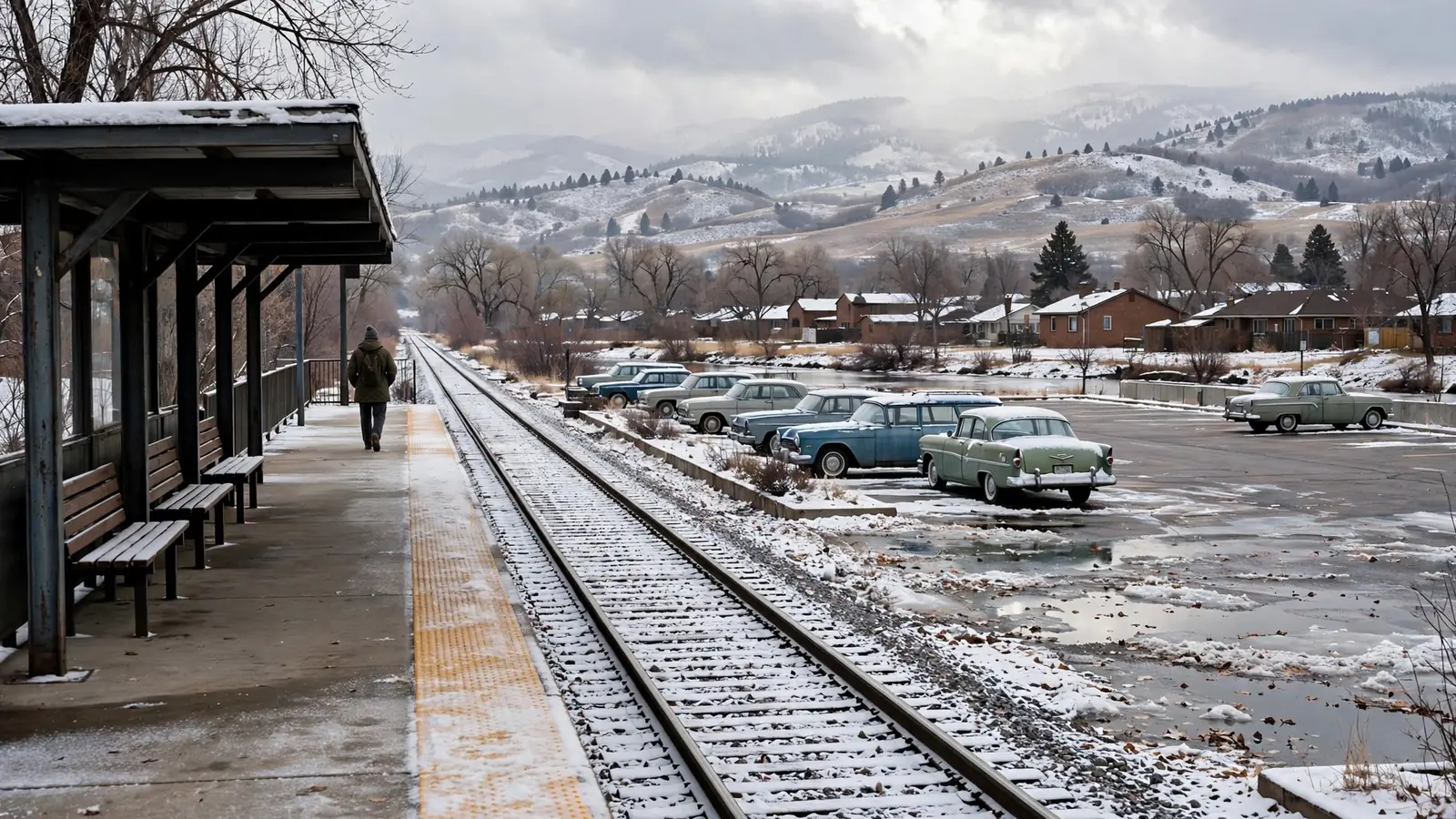
For a long time, the land near the I-70 interchanges in northwest Wheat Ridge was a mix of open ground, light industry and older homes. That has changed. The Clear Creek Crossing development has brought shops, offices, healthcare and housing to the area near Youngfield Street and the Colorado 58 interchange, and the G Line commuter rail, which opened in 2019, ends at the Wheat Ridge·Ward station near Ward Road with new housing planned and built around it. [1]
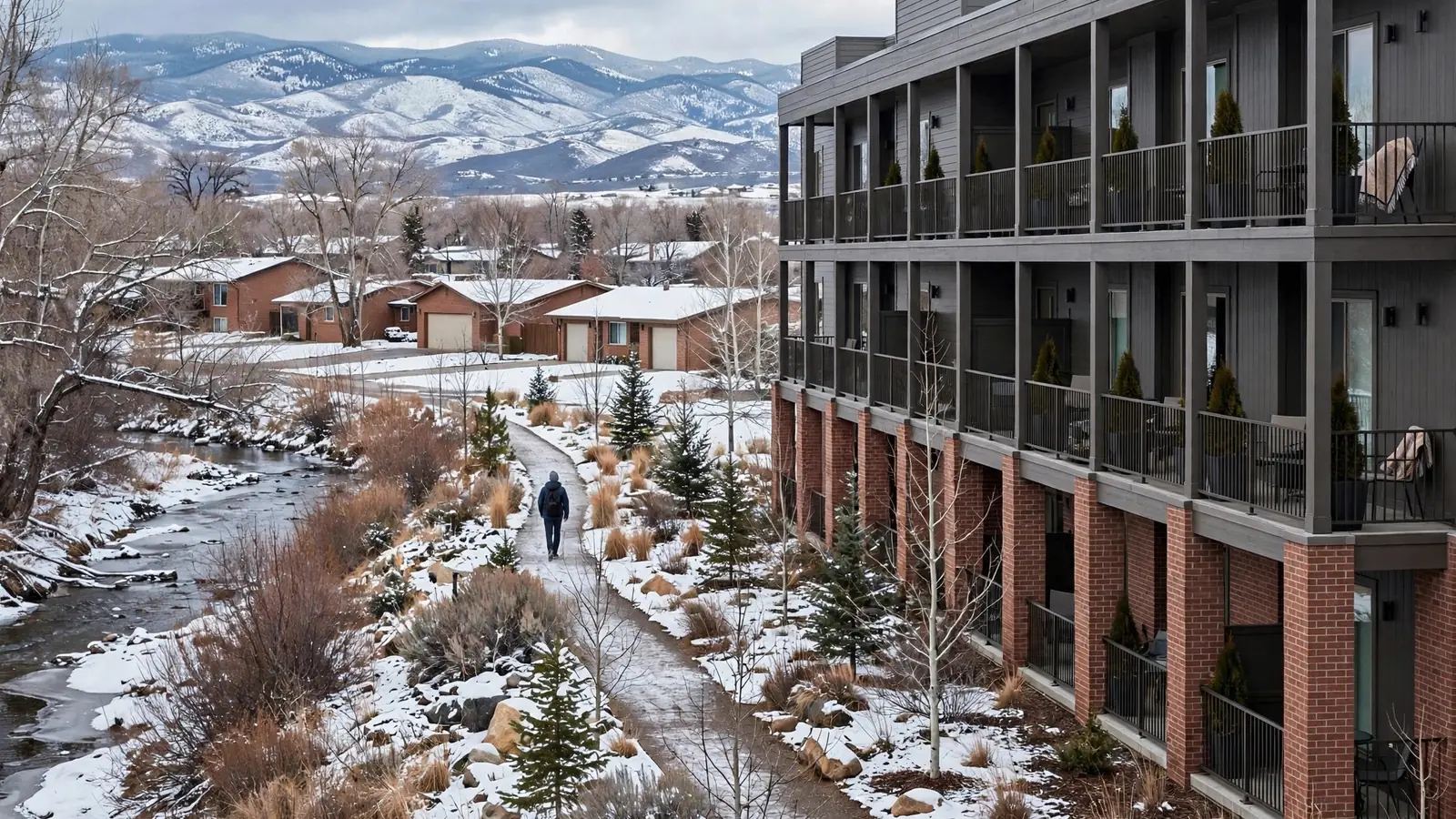
The result is a part of the city where very different buildings sit close together. A three- or four-storey apartment building with sprinklers and stacked bathrooms might be a short walk from a 1960s ranch with a basement and a clay sewer lateral, or from a warehouse with a flat roof. Each needs a different approach when water gets in.
Property mix
Northwest Wheat Ridge property types and water risks
Apartments and condos
Stacked bathrooms and kitchens; leaks travel down through several units.
Townhomes
Shared walls and attached garages; water can cross between homes.
Offices and clinics
Records, equipment and after-hours leaks.
Retail and restaurants
Roof drains, sprinklers and kitchen water lines.
Light industrial buildings
Large slabs, stock on floors and sprinkler systems.
Older single-family homes
Basements, aging pipes and sewer laterals.
Multistorey
Leaks in multistorey apartment buildings
In a building with units stacked one above the other, water does not respect unit boundaries. A toilet supply line that fails on the third floor sends water through the floor into the ceiling of the unit below, down the walls and sometimes on to the first floor. Water can also spread sideways along floor assemblies into neighboring units. By the time it is noticed below, the upstairs unit may have been leaking for an hour.
The first job is finding every affected unit, which means stopping the water at its source and then checking ceilings, walls and floors in every unit below and beside it. In newer buildings, floor assemblies may include engineered joists, sound insulation and gypsum concrete toppings, each of which holds water differently. Drying them may require opening ceilings below rather than floors above.
Multifamily
Who usually handles what in an apartment or condo leak
| Party | Usually responsible for |
|---|---|
| Building owner or HOA | Structure, common areas, building systems and the master policy |
| Unit owner (condo) | Interior finishes and improvements, per the declaration |
| Tenant | Their own belongings, under renters insurance |
| Property manager | Access, notifications and contractor coordination |
| Restoration contractor | Mitigation and drying for whoever engages them |
Sprinklers
Fire sprinklers in newer buildings
Most newer multistorey residential and commercial buildings have fire sprinkler systems. A sprinkler head that is hit, a pipe that freezes in an unheated stairwell or attic, or a fitting that fails can release a large amount of water quickly, often discolored from sitting in the pipes. The building's maintenance staff or sprinkler contractor needs to shut the system down, and the fire department may require a fire watch until it is restored.
Sprinkler losses often affect several units or suites at once. Cleanup follows the same principles as any other water loss, but the water is usually treated with more caution because of what it may carry, and the documentation must be clear for the building's insurer.
Assessment
What a contractor should check in northwest Wheat Ridge
- 1
Identify the building type
Single-family, townhome, multifamily or commercial; it shapes the plan.
- 2
Trace the water path
In multistorey buildings, follow the water up and down.
- 3
Notify affected parties
Neighbors, managers, owners and insurers.
- 4
Map moisture in every affected space
Each unit or suite gets its own readings and photos.
- 5
Check building systems
Sprinklers, roof drains, water heaters and HVAC condensate lines.
- 6
Plan access
Agree on times to enter occupied units and business hours.
Townhomes
Townhomes and attached homes
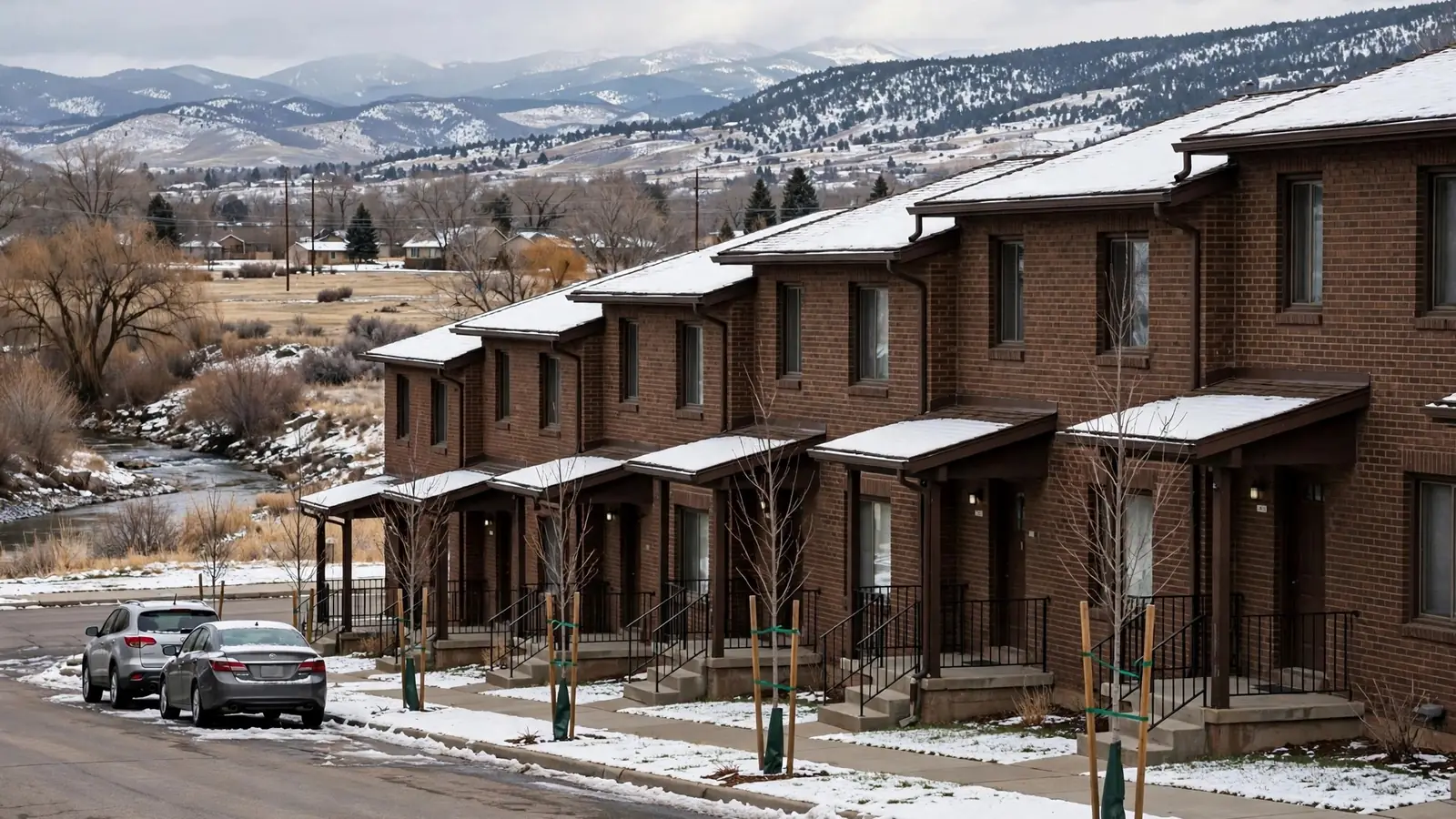
Townhomes in northwest Wheat Ridge share walls, and sometimes roofs and plumbing chases, with their neighbors. A water heater failure or washing machine leak in one home can travel under a shared wall into the next. Roof leaks on a continuous roof may appear in a different unit from the one where the damage started.
HOAs often handle exterior and structural repairs while owners handle interiors, but the details depend on the community's documents. Report leaks to the HOA promptly and keep your own records.
- Know your HOA's responsibilities
- Report shared-wall leaks quickly
- Photograph both sides of a shared wall if you can
Older homes
Older homes near Ward Road
Not everything in this part of the city is new. Streets near Ward Road and west of Kipling include older single-family homes from Wheat Ridge's post-war decades, many on larger lots, some with outbuildings. These houses share the issues found elsewhere in the city: basements finished in stages, aging supply pipes, clay sewer laterals and window wells that clog.
Some of these homes now sit beside new development. Construction nearby can change how water drains across lots, at least temporarily. If your basement starts taking water after nearby grading or construction, document it and raise it with the developer and the city.
Northwest clues
Water damage signs in northwest Wheat Ridge buildings
| What you see | Likely cause | What to ask |
|---|---|---|
| Ceiling drip in an apartment | Unit above: toilet, tub, dishwasher or washer | Has the unit above been checked? |
| Water in a corridor or stairwell | Sprinkler pipe or roof drain | Has the sprinkler contractor been called? |
| Stain on a top-floor ceiling | Roof leak or HVAC condensate | Is the rooftop unit's drain clear? |
| Wet carpet in a ranch basement | Washing machine, water heater or seepage | Where exactly did it start? |
| Water at an office suite entrance | Storm runoff or roof drain overflow | Which way does the parking lot drain? |
Commercial
Shops and offices near I-70
The commercial buildings in Clear Creek Crossing and along Youngfield and Ward Road range from big-box retail to medical offices and restaurants. A water loss here affects customers, staff and stock, and the owner often wants to reopen as quickly as possible. Restoration may be phased, with containment walls and after-hours work, to keep part of the business running.
Our commercial water damage page explains how these jobs are usually managed, including sprinkler discharges, roof drain backups and restaurant losses.
Clear Creek
The creek on the south side
Clear Creek runs along the south side of this part of Wheat Ridge, and parts of the corridor are within the mapped floodplain. Most of the newer development sits outside it, but older properties near the creek may be closer. Spring runoff can raise groundwater near the creek, affecting basements in older homes on lower ground.
If you own or manage property near the creek, check the City of Wheat Ridge floodplain maps and FEMA's flood map service for your address.
Winter
Freeze risks in newer buildings
Newer buildings are generally well insulated, but they still have freeze risks: sprinkler pipes in unheated attics or stairwells, water lines near exterior doors, and units left empty with the heat turned down. A vacant unit with the thermostat set too low during a cold snap can freeze and flood the units below.
Managers should check vacant units during cold weather and keep heat at a safe setting. Residents leaving for a trip should keep the heat on.
Prevention
Reducing water risk in northwest Wheat Ridge properties
- Water sensors under fixturesSmall sensors warn of leaks early, especially in upper units.
- Replace supply linesToilet, faucet and washing machine lines wear out.
- Know the shutoffsUnit shutoffs, building main and sprinkler control valves.
- Clear roof drainsEspecially before storm season and after snow.
- Heat vacant unitsNever let an empty unit get cold enough to freeze.
On your call
Questions for northwest Wheat Ridge property owners and residents
- Can you coordinate with my building manager?Access and communication matter in multifamily jobs.
- How will you document each unit separately?Different insurers may be involved.
- Can you open the ceiling below rather than my floor?Often the faster way to dry a floor assembly.
- Will you check the units beside and below?Water spreads further than it looks.
- Can work be done outside business hours?For offices and shops that need to stay open.
Floor assemblies
Drying floors between apartment units
Between floors in a newer apartment building there is a sandwich of materials: finished flooring, often a gypsum concrete topping for sound and fire separation, a wood or engineered subfloor, joists or trusses, insulation for sound, and a drywall ceiling below. Water that gets into this sandwich is slow to leave. The topping holds water, insulation soaks it up, and the ceiling below sags.
Contractors usually open the ceiling of the unit below to remove wet insulation and get air into the floor cavity, rather than tearing up the floor above. Drying can take several days, with dehumidifiers in both units. Readings should be taken from above and below to confirm the assembly is dry before the ceiling is closed.
Water heaters
Water heaters and laundry in stacked units
Apartments and condos often have a water heater in a closet and a stacked washer and dryer nearby. Many have drain pans, but pans overflow when a tank fails completely, and washing machine hoses burst without warning. In an upper unit, either can send water through several floors.
Residents can help by knowing where their unit's water shutoff is, often in the water heater closet or under the kitchen sink, and by reporting any dripping or rust right away. Managers can schedule periodic checks of tanks, pans and hoses.
Multistorey leak
What happens in the first day of a stacked-unit leak
- 1
First minutes
Water shut off at the unit valve or building main; management and neighbors notified.
- 2
First hour
Every unit below and beside is checked; electrical hazards isolated.
- 3
Same day
Extraction in all affected units; wet ceiling drywall and insulation removed below.
- 4
Day 2
Drying equipment set in each unit; readings logged per unit; belongings moved.
- 5
Days 3 to 6
Monitoring until each unit meets its dry standard; documentation sent to each insurer.
Building systems
Building systems that commonly cause northwest Wheat Ridge losses
| System | Common failure | Where water ends up |
|---|---|---|
| Toilet and faucet supply lines | Burst or cracked connection | Bathroom floor and ceiling below |
| Water heaters | Tank leak, pan overflow | Closet floor and neighboring rooms |
| Fire sprinklers | Damaged head or frozen pipe | Corridors and several units |
| Rooftop HVAC | Condensate drain clog | Top-floor ceilings |
| Roof drains | Blocked by debris or ice | Top-floor units or retail suites |
Rail station area
Living near the Ward station
Housing near the Wheat Ridge·Ward station includes newer apartments and townhomes as well as older homes. Residents near the station are often commuters who are away during the day, so leaks can run for hours before anyone notices. Water sensors that send an alert to a phone are a worthwhile addition for anyone who is out of the house for long stretches.
Mold in units
Mold risk in apartment leaks
In apartments, a leak hidden inside a wall or under a tub can go on for weeks, and the first sign may be a musty smell or mold on the bottom of a wall or the back of a cabinet. Because units are smaller and more tightly sealed than houses, humidity from a leak can build up faster. The EPA's guidance applies here as anywhere: fix the water source, dry quickly, and remove materials that have grown mold.
Residents should report musty smells or stains promptly rather than cleaning over them. Managers should treat repeated complaints in one stack of units as a sign of a hidden leak.
Warehouses
Light industrial buildings in the northwest
There are warehouses and light industrial buildings in northwest Wheat Ridge, with large concrete slabs, high ceilings and sprinkler systems. Water losses here often involve stock stored on the floor, cardboard packaging that collapses when wet and electrical equipment near the floor. Drying a big slab under a high ceiling is more effective if the wet area can be enclosed with plastic sheeting.
Businesses that store chemicals need to tell the restoration contractor, since contaminated water must be handled and disposed of properly.
Parking
Parking structures and surface lots
Large parking lots and structures near shops and apartments collect a lot of water in a storm. If the drains are blocked, water can pond and flow toward building entrances, lower-level storage rooms or elevator pits. Elevator pits in particular can fill with water, which may need a specialist to pump out and inspect. Managers should keep lot drains clear and check them after each big storm.
Residents
Simple steps for apartment residents
- Learn your unit shutoffFind it before you need it.
- Use a drip tray under the washerIt catches small leaks before they reach the floor.
- Never leave the dishwasher or washer running while outMost failures happen while the machine is running.
- Keep renters insurance currentIt covers your belongings and sometimes temporary housing.
Healthcare
Clinics and medical offices near Youngfield
Healthcare and professional offices have grown in northwest Wheat Ridge. For a clinic, a water loss raises specific concerns: patient records, sterile storage, imaging and treatment equipment, and infection control. Equipment that got wet should be checked by the manufacturer or a qualified technician before use, and rooms should be cleaned to the practice's own standards before patients return.
Practice managers should agree in advance with the building owner who handles what in a water emergency, and keep that plan where staff can find it after hours.
Northwest services
Restoration services northwest Wheat Ridge callers ask about
Commercial water damage
Offices, retail, clinics and warehouses.
Read moreDrying floor assemblies
Structural drying between units.
Read moreWater damage cleanup
Extraction and removal after supply line leaks.
Read moreSewage cleanup
Toilet overflows and drain backups.
Read more
New construction
Water damage in very new buildings
Buildings that are only a year or two old can still have water problems: a fitting that was not fully tightened, a shower pan that leaks, a roof flashing detail that lets in wind-driven rain. Newer buildings may also be under a builder's warranty. If water damage appears in a recently completed home or unit, report it to the builder or manager as well as your insurer, and keep records of what you found.
Communication
Keeping residents informed during a building loss
When a leak affects several apartments, residents want to know when the noise will stop, whether they can stay, and who is responsible for their belongings. Clear, regular updates from management, with the contractor's input on how long drying will take, prevent frustration. Residents should keep their own notes and photos too, especially if they need to claim on renters insurance for damaged belongings or temporary housing.
Owners
Notes for property owners in the northwest
Owners of rental and commercial property near Youngfield and Ward Road should keep a current list of shutoff locations, sprinkler contractor contacts and insurance details where after-hours maintenance staff can reach it. Fast decisions in the first hour reduce the damage more than anything else.
Shutoffs
Where the shutoffs usually are in northwest Wheat Ridge buildings
- Apartment unitOften in the water heater closet or under the kitchen sink.
- TownhomeUsually in the basement or mechanical closet, near where the line enters.
- Retail suiteCommonly in a back room or restroom ceiling; ask the landlord.
- Sprinkler systemA control valve in a riser room, operated only by authorized people.
FAQ
Northwest Wheat Ridge water damage questions
Does this line cover Clear Creek Crossing and the Ward Road area?
Yes. The Youngfield, Ward Road and Clear Creek Crossing areas are in ZIP 80033, so calls from them can be connected.
Water is coming through my apartment ceiling. What do I do?
Tell management and the neighbor above, stay away from wet electrical fixtures and photograph the damage.
Who pays for damage from my upstairs neighbor's leak?
It depends on the cause, the lease or declaration, and the policies involved. Notify your insurer and management.
Do I need renters insurance?
The building's policy usually does not cover tenants' belongings. Renters insurance does.
Can a business stay open during restoration?
Often in part, with containment and after-hours work.
What if new construction nearby changed my drainage?
Document it and raise it with the developer and the City of Wheat Ridge.
Are calls answered after hours?
Yes. After-hours leaks in apartments and offices are common, and those calls are connected to an independent contractor too.